“on the tree” search results (10000)
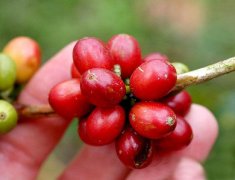
There is a kind of tree that we call the coffee tree, the environment in which the coffee tree is generated.
The formation environment of coffee trees in botany, coffee trees belong to the evergreen trees of the subgenus Rubiaceae, and coffee beans, commonly known as coffee beans, are actually the seeds of the fruit of coffee trees, just because they are shaped like beans, so they are called coffee beans. Climate is the decisive factor for coffee cultivation. Coffee trees are only suitable for growing in the tropics or subtropics, so the zone between latitude 25 degrees south and north is generally called
2015-09-10 Planting trees we call it coffee generation environment botany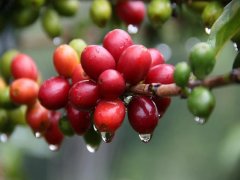
Cultivating "Coffee Mother Tree" in the Netherlands to achieve Coffee Prosperity the History of Coffee in the Middle East
About 16 ⊙○ years ago, the Indian Babudan was infatuated with Middle Eastern coffee and hid seven Yemeni mocha seeds in a hidden bag on his belly to avoid the eyes and ears of Turkish soldiers. After returning to India, he planted coffee beans on Mount Chandragiri Hills in the southwestern state of Kanlataka, outside Babudan's spiritual cave. Due to the climate
2016-03-16 Holland cultivation Coffee Mother Tree Achievement Coffee Prosperity Middle East History India one
How many varieties of coffee are grown in Taiwan?
However, due to different climate, soil and other conditions, the growth of coffee in Zhaoqing encountered many problems. Mr. Lin, the manager of the coffee farm, told reporters that the coffee tree is not resistant to strong light and needs proper shade. If the light is too strong, it will inhibit its growth. Unlike the environment in which coffee trees are planted in Taiwan, it is an all-sunshine environment, and strong light may cause coffee flowers.
2016-07-13 Taiwan coffee manor producing area introduction planting number variety however due to
Introduction to the requirements of planting environment and natural weather and climate of coffee trees in Colombia
Different kinds of coffee mature at different times. And fortunately, unlike Brazil, Colombia doesn't have to worry about frost. Approximately 2.7 billion coffee trees have been documented in Colombia, 66 per cent of which are planted in modern plantations and the rest on small traditionally run farms. The pure taste of Colombian coffee comes from Columbia, which has a coffee maker.
2016-06-12 Colombia coffee planting environment nature weather climate requirements introduction same
Planting conditions and distribution of coffee
What is coffee? Coffee (Coffee) is derived from the Latin word Coffea (biological word name) and belongs to a member of the Rubiaceae family. These plants are all woody plants, most of which are distributed in the tropics, with more than 500 classifications and about 6000 varieties. Most of the Coffea plants are tropical evergreen shrubs 5-6 meters high, and some can grow to more than 10 meters high.
2014-07-08 Coffee knowledge Coffee planting Coffee Distribution Coffee Encyclopedia
Growth and characteristics of Coffee trees
The origin of the coffee tree is Ethiopia in Africa. In botany, coffee trees belong to the evergreen trees of the subgenus Rubiaceae, and coffee beans, commonly known as coffee beans, are actually the seeds of the fruit of coffee trees. They are called coffee beans only because they are shaped like beans.
2014-09-02 Coffee knowledge coffee tree coffee tree planting coffee tree growth characteristics
Cultivation techniques of Coffee Tree Seedling Propagation and Establishment of Coffee Garden
(1) Seedling propagation Coffee seedling propagation can be divided into seed propagation and asexual reproduction. 1. Seed propagation (1) seed collection, seed washing and seed storage during the full ripening period of coffee (the full ripening period of medium-grain coffee in Hainan Island is from February to March, and that of small seed is from September to November). The fully ripe fruits are picked from strong and high-yielding mother trees to make seeds. After the fruit is harvested, peel and wash the seeds immediately. The method is to remove the fruit.
2015-10-07 Coffee cultivation techniques seedlings propagation coffee garden establishment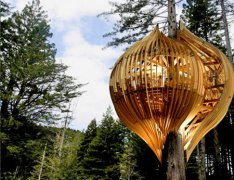
The golden coffee shop on the tree is full of wonders.
Located on a tree in a forest in New Zealand, a coffee shop shaped like a cracked, golden football was built. The coffee shop is 5 meters high from the ground, 10 meters wide and 20 meters high. I was really surprised to see this. What exactly is the reason for building a coffee shop on a tree? How to attract customers? How do customers go up and down? There are a lot of problems, but the designer
2014-07-25 Coffee shop specialty coffee shop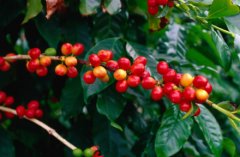
The planting and Distribution of Coffee trees in the World
Coffee is distributed near the equator, tropical and subtropical regions. It is widely distributed in South America, Central America, West Indies, Asia, Africa, Arabia, South Pacific and Oceania. Brazil leads the world in coffee production, accounting for about 30 per cent, followed by Colombia, accounting for about 10 per cent. Taking Central and South America as the center accounts for 60%, followed by Africa and Arabia accounting for about 30%, and the remaining 10%
2014-09-09 Coffee knowledge coffee tree planting coffee tree distribution
From planting coffee trees to harvesting coffee beans
Coffee trees take 3-5 years from planting to fruiting. 6-10 years of coffee trees are the most likely to bear fruit, about 15-20 years, is the harvest period.
2014-07-14 Coffee knowledge coffee tree planting coffee planting process coffee beans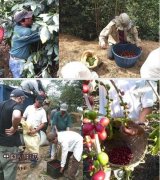
From the planting of coffee trees to the harvest of coffee beans, how to raise coffee trees
Coffee trees take 3-5 years from planting to fruiting. 6-10 years of coffee trees are the most likely to bear fruit, about 15-20 years, is the harvest period. Coffee trees are usually bred in nurseries and grow into saplings, and then moved to coffee farms a year later, in full compliance with the way the Arabs planted and cultivated coffee trees. Coffee trees will continue to take root downward and upward in the first four or five years of their growth.
2015-11-05 Coffee planting coffee beans harvest how coffee fruit 3-5 year
Coffee knowledge types of boutique coffee trees
At present, the best quality coffee beans in the world mainly come from Arabica, Robusta and Liberia, which are mainly proud of the coffee trees in the three places.
2014-09-16 Coffee knowledge coffee tree species coffee encyclopedia
Taiwan Coffee Plantation Introduction Taiwan Coffee Plantation
In 2006, thousands of coffee trees imported from Taiwan officially made their home on a hillside in Xiaoxiang Town, Gaoyao. Our boss is Taiwanese, he and his family are very fond of planting coffee trees, when he came to Zhaoqing to develop the electronics industry, he also specially brought high-quality Arabica varieties of coffee trees from Taiwan, planted in Zhaoqing this hot land. Speaking of coffee trees,
2016-07-11 Taiwan coffee producing area plantation presentation estate 2006 thousands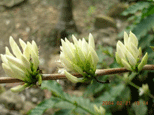
A detailed analysis of the whole process of a coffee from coffee seed to coffee tree and then to coffee bean picking
The first people to drink coffee lived in Ethiopia. A drink called Buncham was found in the Arab scientific literature of 900-1000 AD, but it is not certain that it is coffee. These documents mainly record the scientific value of this bean called Buncham. In addition to introducing the protective effects of this drink on the stomach, organs and skin, the author also mentioned that it can make
2015-12-29 One coffee seed and then coffee beans picking the whole process detailed analysis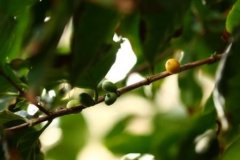
What conditions do you need to grow coffee trees?
Coffee is a perennial evergreen shrub or small tree of Rubiaceae. It is a horticultural perennial cash crop with the characteristics of fast growth, high yield, high value and wide market. Wild coffee trees can grow to a height of 5 to 10 meters, but coffee trees planted on the manor are often cut to a height of less than 2 meters in order to increase the amount of fruit and facilitate harvesting. The opposite leaves of coffee trees are long oval.
2015-11-02 Coffee planting needs what conditions
The planting conditions of coffee trees the types of coffee trees
The Robastian coffee tree, which originated in the Congo in Africa, accounts for about 20% of the world's production. 30%. Robasta coffee tree is suitable for planting in the lowlands below 500 meters above sea level, has strong adaptability to the environment, can resist bad climate, resist diseases and insect pests, and does not need much manual care during soil preparation, weeding and pruning, and can be allowed to grow in the wild. It is easy to cultivate.
2016-06-06 Coffee cultivation conditions species Robbas Bath Origin Africa just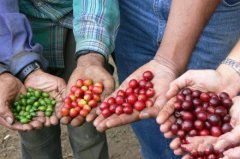
How much do you know about coffee?
Coffee (Xoffea arabica Linn) is a perennial evergreen shrub or small tree of Rubiaceae. It is a kind of horticultural perennial economic crop with the characteristics of fast growth, high yield, high value and wide market. Wild coffee trees can grow to 5 to 10 meters tall, but coffee trees grown on plantations are cut to less than 2 meters in order to increase fruit yield and facilitate harvesting. coffee
2015-04-28 boutique coffee knowledge you know how much
The coffee tree originated in Ethiopia.
The coffee tree originated in Ethiopia, which was originally a wild plant here, and the name coffee comes from the Ethiopian town of Kaffa. In fact, many coffee trees in Ethiopia are still wild plants, and the coffee grown on this coffee tree is full-grained and slightly alcoholic. Humans may have known how to grow coffee trees as early as the 9th century, but
2016-05-24 Coffee from Ethiopia coffee Ethiop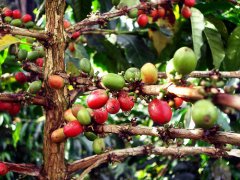
Basic knowledge of coffee what are the types of coffee trees?
Coffee is a perennial evergreen shrub or small tree of Rubiaceae. It is a horticultural perennial cash crop with the characteristics of fast growth, high yield, high value and wide market. Wild coffee trees can grow to a height of 5 to 10 meters, but coffee trees planted on the manor are often cut to a height of less than 2 meters in order to increase the amount of fruit and facilitate harvesting. The opposite leaves of coffee trees are long oval.
2016-05-18 Basic coffee knowledge class which
The planting temperature of coffee tree is between 15 degrees and 25 degrees.
The origin of the coffee tree is Ethiopia in Africa. In botany, coffee trees belong to the evergreen trees of the subgenus Rubiaceae, and coffee beans, commonly known as coffee beans, are actually the seeds of the fruit of coffee trees. They are called coffee beans only because they are shaped like beans. Climate is the decisive factor for coffee cultivation. Coffee trees are only suitable for growing in the tropics or subtropics, so latitude 25 degrees south and north.
2015-10-07 Coffee planting condition temperature between 15 degrees -25 degrees between coffee